

Privly for B2B Sales Teams

Photo by Vitaly Gariev on Unsplash
A lead looks relevant to the researcher, the seller rewrites the message, and the next rep has to reconstruct why the person was approached. Privly brings reviewed leads, campaign preparation, and conversations into a workspace. Your team agrees the qualification and ownership rules that connect them.
Give the team one reason to prioritize a lead
A shared lead list needs more than a temperature label. The next seller should understand why this person fits the offer, which evidence is current, and what still needs confirming. Agree required criteria before comparing prospect volume.
Review your business profile in Privly and use it to guide prospect research. Inspect available lead context and keep unknown requirements visible in the team’s notes. A relevant job title can support research; it cannot confirm an active purchase.
Move from a reviewed list to a reviewed message
Save suitable leads into a list and select the campaign audience deliberately. Check existing customers, active opportunities, duplicate approaches, and stop requests against your current sales records. Coordinate ownership before several sellers pursue the same person.
Review the campaign sender, goal, sequence, execution mode, and previews. Each message should use the same facts that supported inclusion. A polished message cannot repair an unsupported offer or a wrong identity.
From evidence to the next action
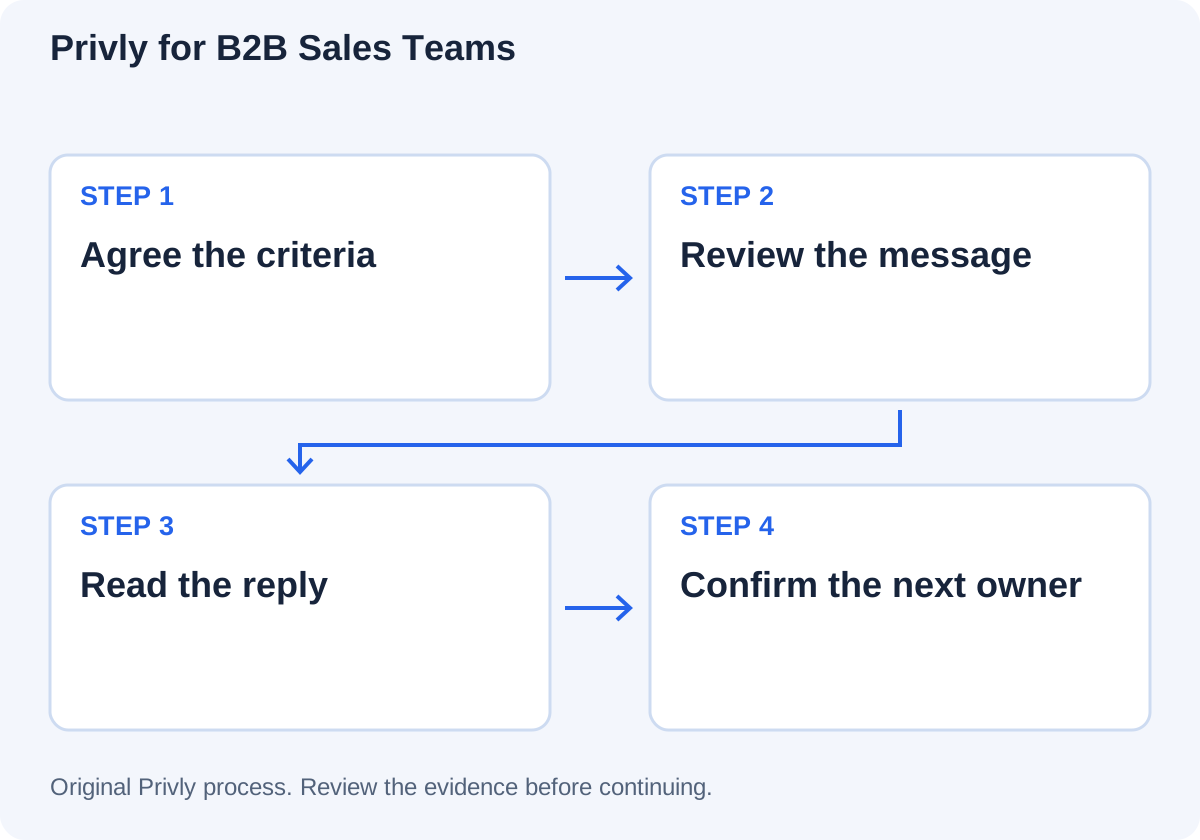
Give every reply an accountable next action
Use Messages to inspect the conversation and campaign context. Name the person responsible for watching replies in your operating agreement. Keep technical questions, commercial promises, and scheduling commitments visible when another teammate takes over.
| Context | What the receiving seller needs |
|---|---|
| Identity | Person, company, workspace, and conversation. |
| Interest | The buyer’s actual words and date. |
| Fit | Confirmed requirements and unresolved constraints. |
| Promise | What was offered or agreed. |
| Ownership | Named next owner and confirmation they accept. |
This acceptance checklist is a team process, not automatic assignment. Use the sales-call guide when a meeting becomes the next action.
Keep exports and sales outcomes distinct
If a file handoff is needed, export the selected leads. The current CSV includes Name, Headline, Location, LinkedIn URL, ICP fit, Email, and Email verified at; email may be blank. Carry the complete evidence, conversation, and next-owner note separately.
Agree destination mapping and matching identifiers before importing. A fit label should not silently become a sales-qualified lifecycle stage. Track positive replies, booked calls, held calls, and opportunities separately in your sales process.
Questions from sales teams
Review workspace access before delegating work or inviting teammates.