

B2B Ideal Customer Profile Template: Examples for SaaS and Agencies
Published · Privly Team
Practical guidance for founders, B2B teams, and small agencies turning buyer signals into reviewed next actions.
Photo by Vitaly Gariev on Unsplash
‘We sell to growing businesses’ sounds reasonable until someone has to build a prospect list. Which businesses, with which problem, and what makes them worth pursuing? This B2B ideal customer profile template turns those questions into a usable brief. You will get a fill-in template, SaaS and agency examples, and an analytics workflow for checking whether your chosen customers buy, stay, and succeed.
What is a B2B ideal customer profile?
An ideal customer profile, or ICP, describes the kind of company your business can serve successfully and sustainably. It connects the company’s situation to a specific problem, a deliverable outcome, and the conditions required for a workable relationship. Industry and employee count help narrow a search, but they do not explain why someone needs your offer.
An ICP describes the account; a buyer persona describes a person within it. HubSpot’s ICP guidance makes this distinction too. For example, a software company with a growing support workload is an account profile. Its support director, finance approver, and technical reviewer are different people involved in the decision.
What buyer and retention data adds to your ICP
A useful profile includes both the buying process and the conditions for customer success. Two research sources help explain why those fields belong in the template.
| Finding | Research scope | Practical implication |
|---|---|---|
| 74% of buying teams experienced unhealthy conflict during the decision process. | Gartner, May 2025: 632 B2B buyers surveyed in August–September 2024. | Record who uses, approves, and can block the purchase, plus the outcome they need to agree on. |
| Groups reaching consensus were 2.5 times more likely to describe their deal as high-quality. | Gartner, same buyer survey | Ask about shared success criteria. This is reported deal quality, not a sales win-rate multiplier. |
| At $250–500 average revenue per account, median net revenue retention was 88% for annual plans and 76% for monthly plans. | ChartMogul SaaS Billing Report: 2024 activity from a dataset of 2,500+ SaaS companies. | Compare like billing terms when evaluating customer segments; contract structure can affect the picture. |
ChartMogul’s comparison covers companies using both billing models and excludes those below $300,000 annual recurring revenue from this revenue-per-account breakdown. It reports an association, not the result of randomly changing customers’ contracts. These findings inform the questions to ask; your own customer evidence determines the profile.
Step 1: Find patterns in customers, losses, and delivery
Export company-level records from your CRM, billing system, and delivery or customer-success notes. Join them by account so several contacts do not become several customers. Record the offer, use case, company size at the time of purchase, acquisition source, price, contract terms, outcome, and reasons for loss or churn.
Include customers who stayed, customers who left, and opportunities that did not buy. Looking only at your biggest wins can hide a segment that is expensive to serve or rarely renews. Interview people about the event that started the search, the alternatives considered, and what made implementation succeed or stall.
Group accounts by a meaningful problem and operating situation. ‘Support teams managing several product lines’ tells you more about a support tool’s use case than ‘technology companies.’ Keep your first profile narrow enough that a teammate can explain why a particular company belongs in it.
Step 2: Fill in the B2B ideal customer profile template
Copy these fields into a shared document or spreadsheet. For every answer, record the evidence and mark whether it is confirmed or a hypothesis. Leave gaps visible instead of filling them with plausible assumptions.
| Field | What to write | Evidence to attach |
|---|---|---|
| Offer and outcome | We help [company type] achieve [specific outcome] through [offer]. | Delivery results and customer interviews. |
| Company characteristics | Business model, industry, relevant team size, service region. | CRM records and current company information. |
| Problem and current process | The recurring problem, its consequence, and how the work is done today. | Buyer statements, support notes, or discovery calls. |
| Required tools and capabilities | Systems, data access, integrations, and internal resources needed to succeed. | Implementation records and technical requirements. |
| Buying group | Likely user, champion, budget approver, and technical or procurement reviewer. | Actual roles involved in prior decisions. |
| Trigger and timing | An observable event that can make this problem a current priority. | A dated request or stated project; keep it separate from company fit. |
| Commercial fit | Sustainable price range, delivery effort, contract terms, and approval path. | Won and lost proposals, billing, and delivery costs. |
| Customer success | The first useful outcome and what continued value looks like. | Activation, retention, adoption, or project outcome records. |
| Exclusions | Requirements you cannot meet and situations your offer does not serve. | Failed implementations, poor-fit losses, and capacity constraints. |
| Confidence and review | Evidence date, unresolved assumptions, owner, and next review date. | Source links, cohort counts, and notes explaining exceptions. |
Treat the buying-group fields as roles to verify, not a list of people to message simultaneously. A team’s size can suggest complexity; it cannot confirm an individual’s budget authority or a current software purchase.
Step 3: Adapt the template for SaaS or agency sales
The examples below are fictional starting profiles. They show how the same worksheet changes with the offer. The employee ranges are authored examples, not research-backed thresholds.
| Field | Support analytics SaaS | Conversion research agency |
|---|---|---|
| Target account | B2B software company with 50–250 employees and a dedicated support team. | B2B SaaS company with 10–100 employees, an established offer, and measurable website demand. |
| Problem | Recurring ticket issues are hard to identify across product lines. | The team cannot explain where qualified visitors abandon the demo-request journey. |
| Offer and outcome | Ticket analysis that helps support and product agree which recurring issues to address. | Customer interviews and funnel analysis that produce a prioritized research report. |
| Delivery prerequisites | Supported helpdesk integration and an owner responsible for reviewing findings. | Usable analytics, access to customer interviews, and someone able to implement recommendations. |
| Buying group to verify | Support leader as champion; product as stakeholder; finance and technical reviewers as needed. | Growth leader as champion; founder or marketing executive as approver; web team as implementer. |
| Possible trigger | A support leader asks how to investigate repeated issues before a product expansion. | A growth leader requests help investigating a documented drop in demo conversion. |
| Exclusion | Unsupported helpdesk or a requirement for capabilities the software does not provide. | Prelaunch business without customers to interview, or a buyer seeking guaranteed revenue results. |
| Outcome to track | Time to first useful finding, continued team use, and retained recurring revenue. | Research adoption, delivery effort, and agreed next-stage conversion outcomes. |
The company profile describes who you can help. The trigger supplies a reason to investigate timing. Our B2B buying signals guide explains how to evaluate that evidence without treating a hiring or funding announcement as a purchase request.
Step 4: Test your ICP with customer analytics
Choose a common acquisition period and compare accounts after the same amount of time as customers. Separate different offers, acquisition channels, billing terms, and price bands where possible. Keep deals that are still open visible; do not quietly count them as losses or ignore a segment with a longer decision cycle.
For sales, calculate win rate as won opportunities divided by won plus lost opportunities, using consistent qualification rules. For recurring SaaS, compare revenue from the same starting customers at a fixed later point. Net revenue retention includes their expansion, contraction, and churn, while excluding revenue from newly acquired customers.
| Measure | Segment A: dedicated support team | Segment B: shared support duties |
|---|---|---|
| Decided qualified opportunities | 20 | 20 |
| Won opportunities | 8 | 5 |
| Win rate | 8 ÷ 20 = 40% | 5 ÷ 20 = 25% |
| Starting monthly recurring revenue from the won accounts | $4,000 | $5,000 |
| Same accounts’ monthly recurring revenue at month 6 | $4,400 | $3,500 |
| Six-month net revenue retention | $4,400 ÷ $4,000 = 110% | $3,500 ÷ $5,000 = 70% |
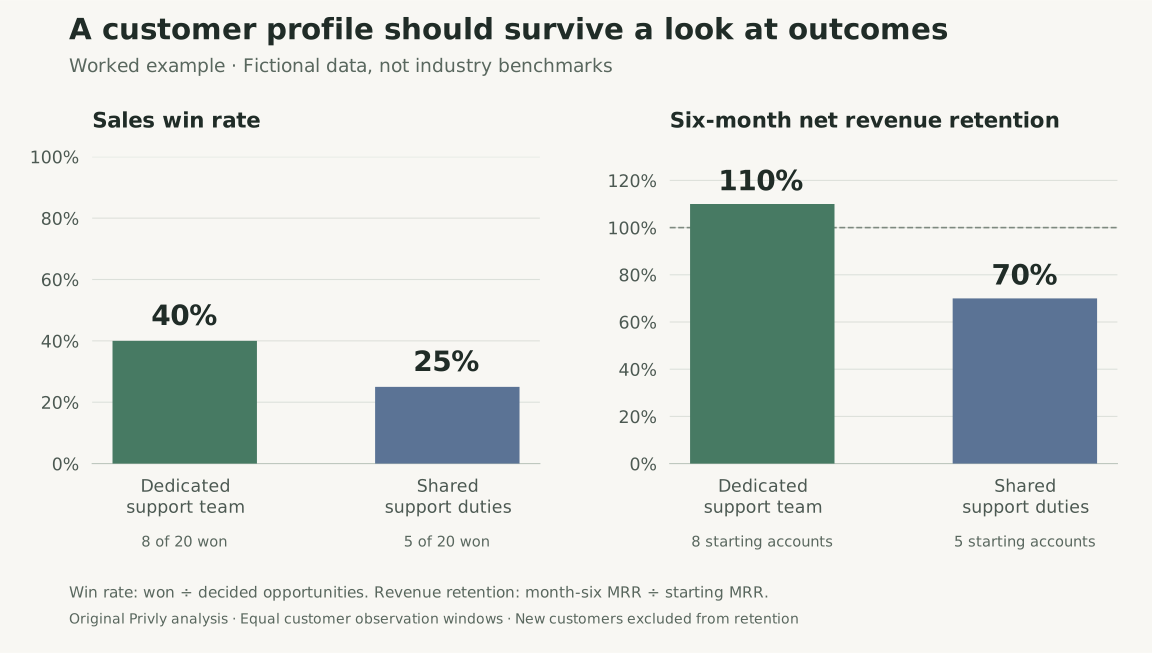
For this example, all opportunities are decided, all wins become paying accounts, and each customer reaches the full observation window. Both groups use monthly billing and comparable acquisition methods. Each customer’s starting revenue is compared with its own month-six revenue before summing the cohort totals.
Segment B begins with more recurring revenue despite fewer customers. Segment A closes a larger share of opportunities and retains more revenue in this example. That makes A a useful hypothesis for the next targeting test. Check account-level results: one expansion or cancellation can dominate a small cohort, and the difference does not prove that team structure caused the outcome.
For project-based agencies, use delivery effort, agreed project outcomes, and repeat work over a defined follow-up period. Track the contribution left after direct delivery costs as well as fees. A completed one-off project is not subscription churn, and a high-value client can still be a poor fit if delivery repeatedly exceeds the planned scope.
Step 5: Turn the profile into a targeting decision
Classify a small prospect batch using the template before writing messages. Record fit, exclusions, missing information, and any current buying evidence separately. Review rejected accounts too, so an overly strict profile does not quietly hide a useful adjacent segment.
Use the B2B lead scoring model to turn those observations into review priorities. Once a relevant opportunity is confirmed, our intent-based outreach guide helps connect the evidence to a useful next message.
Keep a dated version of the profile. When you change a criterion, explain which customer outcomes or interviews support the change. This lets the team learn from new information without redefining the target every time one unusual deal appears.
Common ICP mistakes
- Defining the audience only by industry, headcount, or funding stage without naming the problem.
- Copying your largest customer even when that account is unusually expensive to support.
- Studying only wins and excluding churn, failed implementations, and lost opportunities.
- Comparing annual-contract customers with monthly customers without accounting for the different terms.
- Treating a website-generated profile as confirmed customer research.
Ideal customer profile questions
How do I create an ICP without existing customers?
Start with a clearly labeled hypothesis based on the problem your offer can solve and the conditions needed to deliver it. Interview potential buyers about their current workflow and past purchasing decisions. Include people who decline your offer. Use pilots and observed outcomes to revise the profile as evidence develops.
Can a business have more than one ICP?
Yes, when the offers, problems, delivery requirements, or buying processes differ enough to need separate targeting. Keep the evidence and results for each profile separate. Avoid creating a new segment merely because a company has a different title or belongs to a neighboring industry.
How often should I update my ICP?
Set a regular review that fits your sales cycle; a quarterly review is a practical starting point. Revisit sooner when the offer changes or repeated losses, churn, or delivery problems challenge an important assumption. Check cohorts at comparable ages before interpreting a short-term change.
Does matching the ICP mean a company is ready to buy?
No. Customer fit describes whom you can serve. Buying intent concerns evidence of a current need or decision. A perfect-fit account may have no active project; an urgent prospect may require something you cannot deliver. Review both before choosing a next action.
Create your first profile, then test it against evidence
Use Privly’s free ICP identifier to generate a starting profile from your website. Review the suggested audience, problem, and exclusions, then use this template and your customer data to refine it. A useful profile stays connected to what buyers need and what your team can deliver.
Research and source notes
Sources reviewed September 30, 2026. The worksheet, SaaS and agency profiles, and cohort analysis are original examples. The cohort figures are fictional and demonstrate the calculations; they are not Privly customer results.
- Gartner buyer-team research — published May 7, 2025; survey findings about conflict, consensus, and reported deal quality.
- ChartMogul SaaS Billing Report — page dated May 18, 2025; aggregated 2024 subscription data. The billing comparison reports company medians, not an individual customer’s renewal probability.
- HubSpot ICP template guidance — reference for the distinction between account profiles and individual buyer personas.
 Lead Scoring
B2B Lead Scoring: A Fit and Intent Model for Small Teams
Build a practical B2B lead scoring model with fit and intent criteria, worked examples, and buyer research from Gartner and 6sense.
September 30, 2026 · Privly Team LinkedIn Outreach
LinkedIn Outreach Strategy: Research, Messages & Follow-Ups
Build a LinkedIn outreach strategy with research-backed statistics, connection request examples, follow-up messages, and a clear way to measure positive replies.
September 18, 2026 · Privly Team Competitor Monitoring
Competitor Monitoring: How to Find Buyers Ready to Switch
Monitor dissatisfaction, comparison questions, missing capabilities, and genuine buying opportunities.
August 13, 2026 · Privly Team