

LinkedIn Outreach Strategy: Research, Messages & Follow-Ups
Published · Privly Team
Practical guidance for founders, B2B teams, and small agencies turning buyer signals into reviewed next actions.
Photo by Annie Spratt on Unsplash
You send a connection request, get accepted, and write a friendly message. Then nothing. A useful LinkedIn outreach strategy gives the right person a specific reason to answer. Here is how to build one, using published research, original message examples, and measurements that keep replies separate from sales outcomes.
What is a LinkedIn outreach strategy?
A LinkedIn outreach strategy is a repeatable way to choose relevant prospects, explain why you are contacting them, and offer a useful next step. It connects targeting, connection requests, direct messages, follow-ups, and measurement. A message template covers only one part of that work.
For a founder or small B2B sales team, the first decision is simple: who has a problem you can credibly help solve? If that answer is vague, a more polished message will still be difficult to answer.
What outreach statistics actually tell us
| Research | Finding | How to read it |
|---|---|---|
| Gartner, 2025 | 73% of surveyed B2B buyers said they avoid suppliers sending irrelevant outreach. | A survey of 632 buyers in August–September 2024; this measures buyer attitudes. |
| HubSpot, 2025 | 42% of surveyed sales professionals picked social media as their strongest cold-outreach response channel. | Share of 1,000+ surveyed sales professionals who chose social media; covers social channels broadly. |
| Expandi, 2026 | 28.5% of connection requests were accepted across 13.2 million requests. | Connection acceptance measured across platform activity from May 2025–April 2026. |
Our practical takeaway: make relevance visible and measure each stage separately. Use each finding for the audience and outcome it measures.
Use these findings alongside your own campaign data. Your audience, offer, sender reputation, and existing relationships shape results.
Step 1: Choose a buyer and a reason to reach out
Define the company, role, problem, and exclusions before building your prospect list. For example: operations leaders at small B2B agencies that manage client handoffs, excluding solo consultants. That is specific enough to shape both research and messaging.
Next, find a relevant, recent fact: a request for recommendations, a stated workflow problem, or a project the person has discussed publicly. Save the link and date. A hiring announcement can suggest a question worth asking; it does not prove the company has budget or needs your product.
Keep three notes per prospect: what you observed, why it may matter, and what still needs confirming. Our guide to B2B buying signals helps separate evidence from assumptions.
Step 2: Write a relevant LinkedIn connection request
Give the recipient a concrete reason to recognize the connection. Use only context you actually read. These original examples assume an agency operations lead has publicly discussed delayed client handoffs; replace that scenario with your own verified context.
The note explains the connection without inventing familiarity or requesting a call. Your profile should also explain who you help, so the person can judge whether connecting makes sense.
Step 3: Make your first outreach message easy to answer
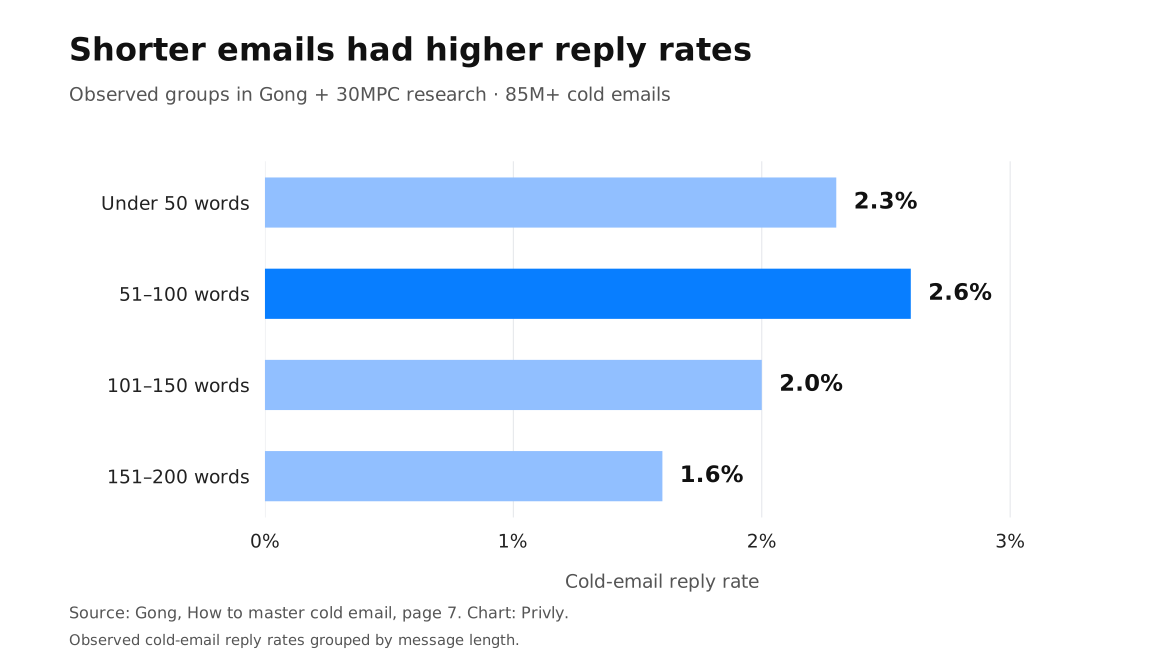
In Gong and 30MPC’s analysis of 85M+ cold emails, the 51–100-word group had a 2.6% reply rate, compared with 1.6% for 151–200 words. The cold-email comparison offers a useful starting point for your own message-length tests: remove unnecessary detail and make the message easy to answer.
For a LinkedIn outreach message, try three parts: the observed problem, something useful you can offer, and one easy question. Avoid a calendar link before the person has expressed interest. Only offer a resource you already have and can deliver.
The useful detail is the connection between the stated problem and the offer. If you cannot explain that connection, revisit the prospect fit before polishing the wording. When they say yes, deliver the resource before asking for anything else.
Step 4: Send a LinkedIn follow-up that adds something
A follow-up should make the conversation more useful. For an initial manual test, wait several business days and send one concise follow-up with a practical detail. Adapt this starting cadence to the context and any timing the person gives you.
If there is still no reply, pause. A refusal ends the sequence. A ‘later’ response should lead to an agreed reminder, not repeated nudges. Keep all existing conversation context together so another teammate does not restart the same pitch.
Measure replies, positive replies, and meetings separately
A reply saying ‘please stop’ increases total replies without helping your pipeline. Keep accepted connections, people who replied, positive conversations, and booked meetings in separate columns. Record the denominator and observation period next to every rate.
| Stage | Example count | Calculation |
|---|---|---|
| Accepted invitations | 30 of 100 invited people | 30% acceptance |
| People who replied | 6 of 30 people messaged | 20% recipient reply rate |
| Positive replies | 3 of 30 people messaged | 10% positive reply rate |
| Meetings booked | 1 of 100 invited people | 1% invitation-to-meeting rate |
In this example, each percentage describes a different stage of the same outreach sequence. Name the outcome alongside the rate: 20% replied, while 1% of invited people booked a meeting. This example counts unique people; a benchmark that divides replies by individual messages has a different denominator. Compare like with like.
Review one segment at a time and change one thing: the audience, opening reason, or offer. Keep the observation window consistent. Look for patterns across comparable batches before choosing a winning template.
Common LinkedIn outreach mistakes
- Treating a job title, funding announcement, or post like as proof that someone wants to buy.
- Opening with a generic compliment, then switching immediately to a meeting request.
- Promising results you cannot substantiate or implying you have helped a company you have never worked with.
- Repeating the same follow-up without giving the recipient anything useful.
- Comparing an email reply rate with a LinkedIn acceptance rate, or presenting vendor results as your own.
LinkedIn outreach questions
What is a good LinkedIn outreach reply rate?
Use a benchmark with the same audience, message type, and denominator as your campaign. Then track positive replies and meetings alongside it. There is no single percentage that tells you whether every B2B outreach campaign is healthy.
Should a connection request include a sales pitch?
Use the note to explain the relevance of connecting. Save the fuller explanation for a conversation. A concise, truthful reason is easier to evaluate than a compressed product brochure.
Can AI write personalized outreach messages?
It can help draft and shorten a message using facts you supply. Review the source, the implied problem, and every claim before sending. Fluent wording cannot turn a guessed need into a verified one.
Put the research into your next outreach campaign
Choose one buyer group, record a real reason to contact each person, and prepare a useful offer before writing. Our intent-based outreach guide explains how to connect a buying signal to the next action.
In Privly, start with your website, review the suggested customer profile, find relevant LinkedIn leads, and organize them into lists. Review message drafts and campaign steps using the available lead context. Begin with the free ICP identifier to make your next prospect list more specific.
Research sources
Sources accessed September 18, 2026. This guide combines published research, practical recommendations, and worked examples.
- Gartner buyer survey — published June 25, 2025; fieldwork in 2024.
- HubSpot State of Sales — 2025 survey findings.
- Expandi outreach benchmarks — published May 19, 2026; platform activity across May 2025–April 2026.
- Gong and 30MPC cold-email research — 85M+ emails; length comparison on PDF page 7.
 Competitor Monitoring
Competitor Monitoring: How to Find Buyers Ready to Switch
Monitor dissatisfaction, comparison questions, missing capabilities, and genuine buying opportunities.
August 13, 2026 · Privly TeamSaaS MarketingHow to Market a SaaS Product: A Practical 30-Day Plan
Use clear positioning, an ICP, buyer signals, useful conversations, and a practical 30-day plan.
August 13, 2026 · Privly TeamIntent-Based OutreachIntent-Based Outreach: Turn Buying Signals Into Relevant Messages
Learn how evidence, fit, timing, and human review create more relevant B2B outreach.
August 13, 2026 · Privly Team